Packing and crating in Cape Town Soft packing and custom plywood or ISPM-15 timber crates for art, furniture and export, made in our own workshop
JLog does soft packing and custom crating for art, designer furniture and export goods in its own workshop in Woodstock, Cape Town. Every crate is built to your item’s size, in plywood (exempt from ISPM-15, so no fumigation or stamp is needed for export) or in ISPM-15 timber. Crates start at R1,500 and most are built in 1–3 working days. We can also collect your item, store it, handle the export paperwork and customs clearance, and ship it.
At a glance
What does a crate cost, and how long does it take?
Crates start at R1,500. Each one is built to your item’s size, in plywood or ISPM-15 timber, in our Woodstock workshop. Standard crates take 1–3 working days, oversized crates 3–5 working days, and rush builds are by arrangement. Send us the item’s size and destination for a quote.
What does a crate cost in Cape Town?
Crates start at R1,500 for a small unframed painting. A large framed artwork is about R2,500–R4,000 and a dining table R7,000–R12,000. The price depends on the crate’s size and the protection inside.
Something else?WhatsApp a photo and the size. We’ll quote it. →
Prices include the plywood crate, internal foam lining and external marking. Collection, freight and packing materials (acid-free tissue, aerothene, moisture barrier) are quoted separately. All-in export quotes, covering crating, collection, freight and export clearance, are available on request.
Who we pack and crate for
Artists, galleries and collectors
Paintings, sculpture, ceramics and mixed media, packed with acid-free tissue, foam and corner protection, then crated to size. We collect from your studio, gallery or home anywhere in Cape Town.
Designer furniture makers
Tables, chairs, cabinets and lighting, braced with plywood cleats or foam blocks. The crate is built to the piece’s size, so you pay freight on as little empty space as possible.
Businesses exporting goods
Plywood or ISPM-15 timber export crates for machinery, parts, electronics and samples. One-off or repeat orders, no minimum. We can also do the export clearance and freight if you want one supplier. Heavy item? Tell us the weight when you ask for a quote and we’ll plan how it gets to the workshop.
Crates only
Already have a courier or forwarder? We build the crate in our Woodstock workshop and you collect it, or we deliver it on a dedicated trip. Outside Cape Town? We send ready-made, foam-lined crates, empty, anywhere in South Africa, so you can pack your artwork where you are.
Art packing and crating, from your studio to your buyer
Sold a work to a buyer overseas, or sending pieces to a fair? We can arrange the whole trip:
- We collect the work from your studio, anywhere in Cape Town.
- We pack and crate it to size in our Woodstock workshop.
- We store it with us until it ships, if you need time.
- We do the export paperwork and SARS clearance.
- We ship it with FedEx or DHL, or deliver it in South Africa on a dedicated trip.
Does the work need a SAHRA export permit? The owner applies for the permit. Tell us when you ask for a quote and we’ll plan the shipment around it.
We’re the official carrier for the Investec Cape Town Art Fair, now in our fourth year.
EXAMPLE JOB
A large framed oil painting, 120 × 90 cm, Cape Town to London. We collected it from a Sea Point gallery, soft-wrapped it with glassine and corner protection in our Woodstock workshop, and built a foam-lined plywood crate with 50 mm clearance on every face. The crate’s size and weight went straight onto the FedEx commercial invoice. We prepared the export documents, handled SARS export clearance and booked the shipment. Collection to dispatch: three working days.
A comparable job, shared for illustration.
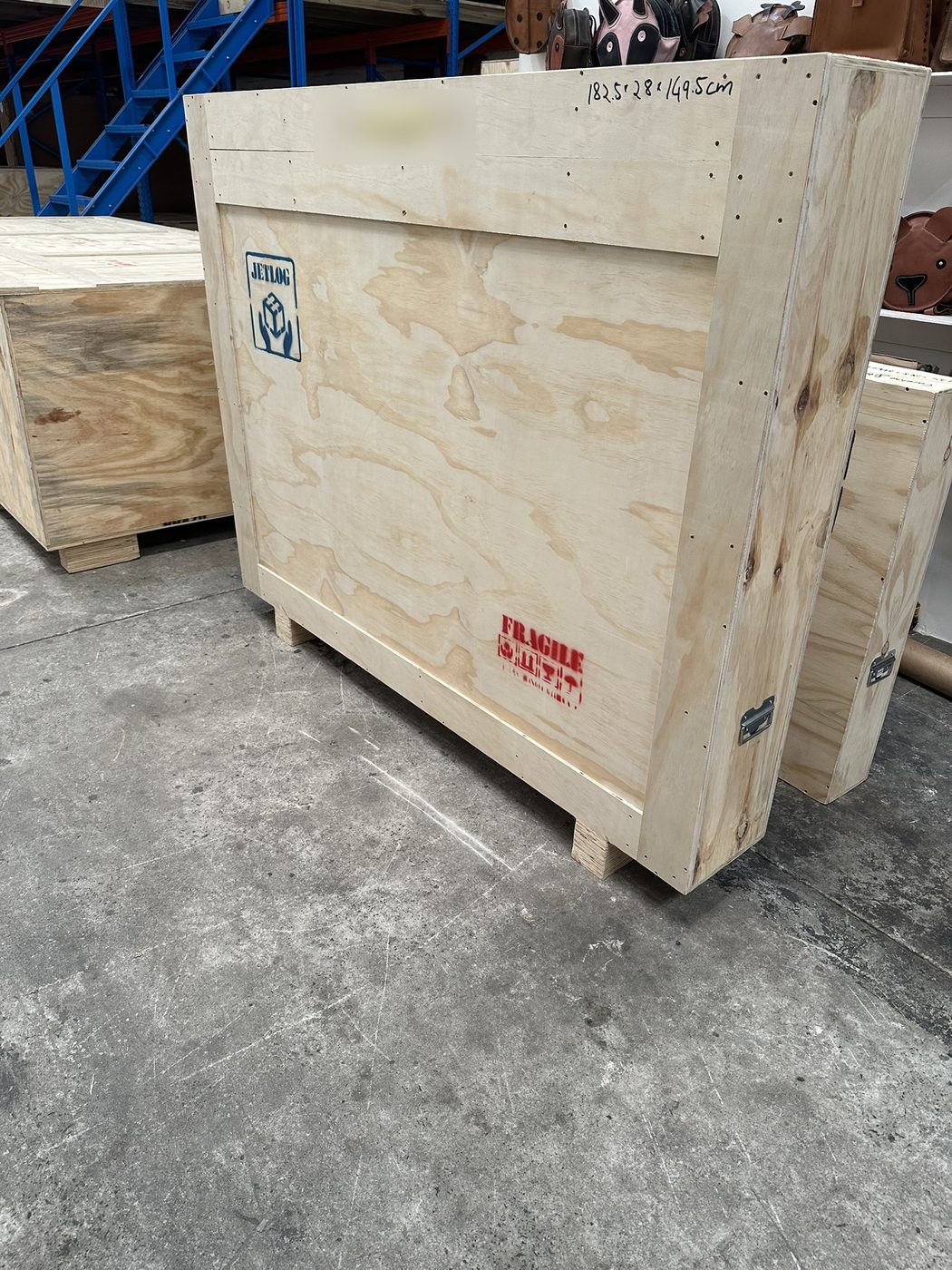
How a JLog crate is built
Here’s how we build a packed export crate.
-
Measure
We take the item’s size and weight, check how fragile it is and where it’s going, and plan the crate and the protection inside.
-
Cut and assemble
The crate is cut to size from plywood or ISPM-15 timber and assembled in our workshop.
-
Line and brace
Foam lines the inside, and plywood cleats or foam blocks hold the item in place.
-
Pack and close
The item is wrapped in materials that suit it, such as acid-free tissue for art, secured in the crate, and the lid is screwed down.
-
Mark
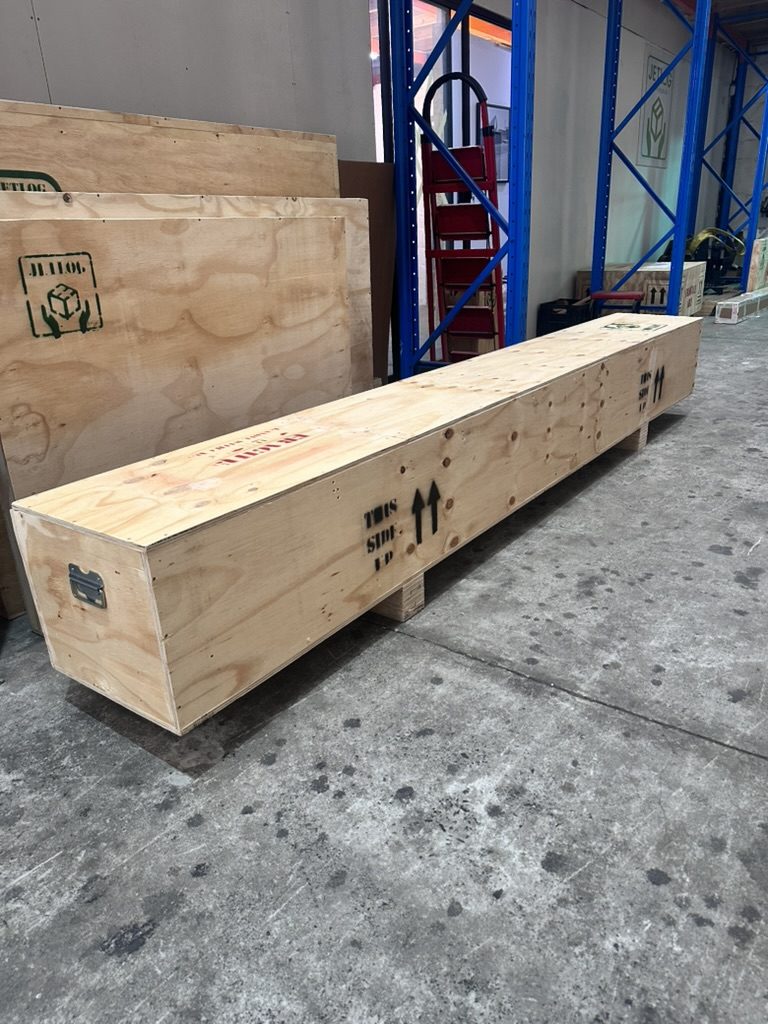
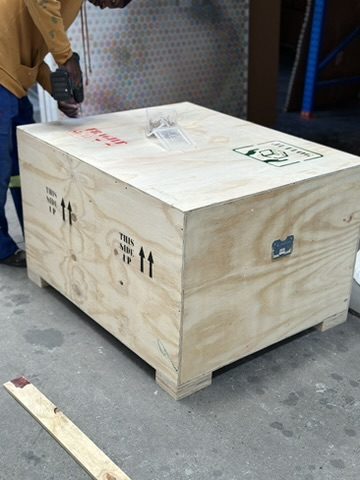
We mark the outside FRAGILE and THIS SIDE UP, so every handler knows how to carry it.
-
Weigh and dispatch
We record the finished crate’s size and weight for the freight booking. FedEx or DHL collects it, your forwarder collects it, or it waits in our warehouse until it ships.
From our workshop

Soft packing or a crate: which do you need?
The short answer: soft packing suits smaller, sturdier items going by courier or across town. Crate it if it’s fragile, heavy, oversized or valuable, or going by air or sea freight.
Soft packing
Wrapping and padding in a strong box, for small, sturdier items. It’s priced per item by size, and small items start at under R100. We usually collect the item from you. Often we wrap it lightly just for the trip to our warehouse, then pack it properly there.
Custom crate
A plywood box built to your item’s size and lined with foam, with the item packed inside. From R1,500, and most are built in 1–3 working days.
What is ISPM-15, and does your crate need it?
ISPM-15 is the international standard for wooden packaging. It stops wood pests, such as beetles and their larvae, travelling between countries. The solid timber in a crate or pallet must be heat-treated (at least 56°C right through to the core for at least 30 continuous minutes) or treated another approved way, then stamped with the ISPM-15 mark (also called the IPPC stamp) before it crosses a border.
The USA, the UK, the EU, Australia, China, the UAE and most other countries apply it. Solid-wood packaging without the mark can be refused, treated or destroyed at the destination, at the importer’s or shipper’s cost.
Plywood is different. It’s a processed wood, made with heat, glue and pressure, so ISPM-15 doesn’t apply to it: no treatment and no stamp needed. ISPM-15 also doesn’t apply to deliveries inside South Africa.
That’s why our plywood crates need no fumigation and no stamp to cross a border. We also build ISPM-15 timber crates.

Crate only, or crate and ship
Buy just the crate, or let us do the rest, so you deal with one company instead of several.
Get a packing and crating quote
Send the size, a photo and where it’s going. We reply within 4 business hours.
What to have ready
- Photos: front, sides and any fragile parts
- Height × width × depth in cm
- Approximate weight
- What it is and what it’s made of
- Destination country, or “crate only”
- The date you need it by
Don’t have it all? Send what you have and we’ll ask for the rest.
Your crating request
Fill in what you know. We reply within 4 business hours.
Packing and crating questions
How much does a custom crate cost in Cape Town?
From R1,500 for a small unframed painting. A large framed artwork is about R2,500–R4,000, a dining table R7,000–R12,000. Price depends on the crate’s size and the protection inside.
Do your crates need an ISPM-15 stamp for export?
Our plywood crates do not. Plywood is a processed wood that ISPM-15 exempts, so it needs no heat treatment, fumigation or stamp, and is accepted for export. We also build ISPM-15 timber crates. The USA, UK, EU, Australia, China, the UAE and most other countries apply ISPM-15 to solid-wood packaging.
Is plywood allowed under ISPM-15?
Yes. Plywood is a processed wood, so ISPM-15 doesn’t apply to it. Only solid timber, such as solid wooden skids and battens, has to be heat-treated and stamped. In our plywood crates the skids and cleats are plywood too, so there is no solid timber in them.
Do I need an ISPM-15 crate for a delivery inside South Africa?
No. ISPM-15 applies to wooden packaging that crosses an international border. A crate still protects fragile or valuable items on local trips, and we can deliver it for you on a dedicated trip.
How long does it take to build a crate?
Most standard crates are built within 1–3 working days; oversized crates take 3–5 working days. Rush builds can be arranged — tell us your deadline when you ask for a quote.
What’s the difference between packing and crating?
Packing is the protection around the item: tissue, foam and corner protection. Crating is the rigid plywood box built around it. Our crates are lined with foam, and when we pack your item for you, the packing goes inside the crate.
Do you offer soft packing without a crate?
Yes, for small, sturdier items: wrapping and padding in a strong box, priced per item by size, with small items starting at under R100. We usually collect the item from you. For fragile, valuable or heavy pieces, or anything going by air or sea freight, we recommend a crate.
Do you crate on site at my home or business?
No. We build every crate in our workshop in Woodstock. We can collect the item from anywhere in Cape Town, or you can drop it off by appointment.
Can you collect the item for crating?
Yes, anywhere in Cape Town — from studios, galleries, homes and business premises.
Can I drop an item off at your workshop?
Yes, by appointment. WhatsApp +27 72 312 3034 or call 021 300 6099 first so we can have the right materials ready. We can also collect anywhere in Cape Town.
Can I buy a crate without your shipping?
Yes. We build the crate in our Woodstock workshop and you collect it, or we deliver it on a dedicated trip. You’re free to use any courier or forwarder.
Can you send an empty crate outside Cape Town?
Yes. We send ready-made, foam-lined crates, empty, to anywhere in South Africa, so the sender can pack their artwork in the crate where they are.
Do you make export crates for businesses?
Yes — one-off or repeat orders for machinery, parts, electronics and samples, with no minimum order. We can add export clearance and freight if you want it handled end to end.
Do you handle SAHRA export permits for art?
No — the owner or seller applies to SAHRA. Tell us at quote stage if a work might need a permit and we’ll build the timing into the shipping plan.
Is my item insured while you crate and ship it?
JLog carries goods-in-transit insurance; we’ll share the details on request. For high-value art we also recommend the owner’s own fine-art policy, and we can declare the value on the export paperwork.