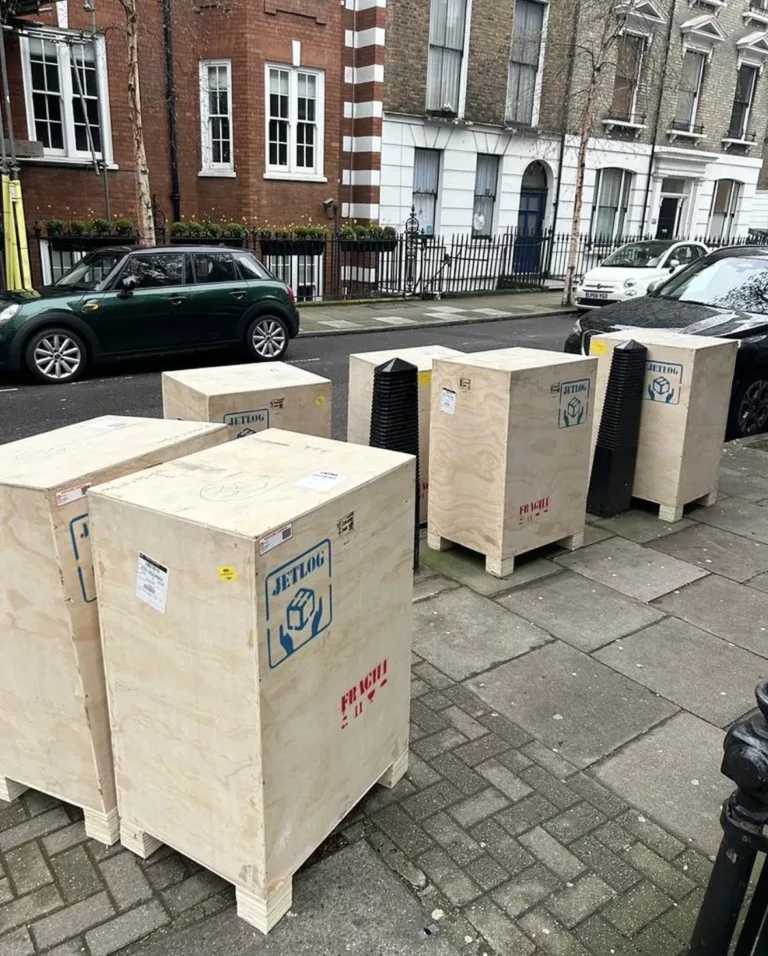
What Is Parcel Forwarding?
Parcel forwarding is a logistics service that receives goods on your behalf at a local address, inspects and photographs them, consolidates multiple shipments if needed, handles all customs paperwork, and forwards the goods to your final destination worldwide.
The core use case for this service is:
SA Businesses Consolidating Orders
You’re a South African brand or wholesaler. Your suppliers or overseas warehouses send you parcels to your JLog receiving address in Woodstock, Cape Town. Over a week, you receive 5–10 parcels. Instead of shipping each parcel individually to your customer in the EU (which costs 5 separate shipments at full courier rate), you consolidate all 5 parcels into one box and ship it once. This cuts your freight cost by 50–70% — a significant saving at scale.
Parcel forwarding works because most couriers charge per-shipment fees; consolidation collapses multiple shipments into one, spreading the fixed cost (handling, documentation, customs) across multiple parcels and dramatically lowering the per-item freight cost.
How JLog Parcel Forwarding Works — 6 Steps
- Receive & Inspect: Parcels arrive at our Woodstock warehouse in Cape Town. We unload, check condition, and verify contents against packing slip or sender documentation.
- Photograph & Log: Every parcel is photographed, logged into our system, and assigned a unique barcode. We send you the photos and tracking by email and WhatsApp.
- Consolidate (Optional): If you have multiple parcels, we consolidate them into one shipment. We carefully repack using museum-grade materials if items are fragile (art, ceramics). Standard goods go into one carton with internal packaging.
- Prepare Customs Paperwork: Our customs team prepares commercial invoices, packing lists, HS code declarations, and any required export/import permits. For art and antiques that need CITES, the exporter applies for the permit with DFFE and we ship once it is in place.
- Dispatch: Once cleared and packed, we hand off to our carrier (DHL, FedEx, or a sea freight consolidator depending on your destination and budget). You receive a tracking number immediately.
- Door-to-Door Delivery: The consolidated parcel travels to your destination with full customs clearance pre-done. Most parcels arrive without delays or surprise duties.
The entire cycle typically takes 48 hours from first parcel receipt to dispatch (for consolidated shipments). Single-parcel forwarding is usually dispatched same-day or next-day.
Consolidation: Save 30–50% on International Freight
Consolidation is the superpower of parcel forwarding. Here’s why it works:
Example: 5 Parcels to the EU
Five parcels shipped individually means paying five separate courier charges — the fixed per-shipment fees (handling, documentation, customs) are duplicated five times over.
With Consolidation (1 Combined Shipment):
The same five parcels combined into one shipment pay those fixed fees once, and sea-freight consolidation lowers the per-kg cost substantially.
Typical saving: 30–50% versus shipping separately.
Exact costs depend on weight, destination and service level and are priced on request — get a forwarding quote.
Consolidation is especially powerful for sea freight. A consolidated parcel via sea freight to the EU is significantly cheaper per kg than air freight. The trade-off: sea freight takes 4–6 weeks instead of 4–10 business days. For brands that can plan ahead, consolidation is a no-brainer.
Consolidation Best Practices
Consolidation works best when you receive multiple parcels within a 2–4 week window. If your suppliers ship randomly, you may wait longer for a full consolidation. JLog lets you choose: wait for more parcels to arrive, or dispatch now at single-parcel rates. You control the trade-off between cost and speed.
Customs & Duties: Clear Before Your Customer’s Door
One of parcel forwarding’s biggest advantages is clearing customs in South Africa before the goods leave. This means your customer receives a parcel that’s already been cleared — no customs delays at destination, no surprise duty bills.
How JLog Handles Customs
Our customs team prepares correct commercial invoices and HS code declarations for every parcel. We work with the destination country’s customs regulations:
EU Imports: We prepare the commercial invoice in EUR, declare the HS code correctly, and mark items as “new” or “used” as appropriate. The parcel arrives at EU customs already classified — usually no delays.
UK Imports: Post-Brexit, all imports from SA require customs pre-notification. We handle HMRC pre-clearance so your shipment clears on arrival.
US Imports: We provide a detailed invoice with tariff numbers. US customs uses this to assess landed duty cost. We don’t pay US duties on your behalf (you or your importer pays at entry); we just ensure correct documentation.
Art & Antiques (CITES/Cultural Goods): If you’re forwarding art, sculpture, or items over 100 years old, we verify they don’t require cultural export permits (SA Department of Arts & Culture) or CITES certificates (endangered species materials). This can take 5–10 business days but is essential to avoid shipment seizure.
What’s Duty-Free & What’s Not
Most countries allow items under a certain declared value (often USD 100–200) to enter duty-free as “gifts” or “samples.” Above that, import duties apply. JLog declares the true value so your importer can assess their duty cost upfront — no surprises.
For EU imports of goods valued under EUR 150, VAT is often deferred. For UK imports, VAT is now charged at entry. We prepare invoices to match each destination’s rules.
What Can’t Be Forwarded — Prohibited & Restricted Items
JLog is honest about what we can’t forward internationally. Some items are prohibited by law; others are restricted and require permits.
Prohibited (Cannot Ship)
Cultural goods & antiques (SA export restrictions): Items over 100 years old, sculptures, artefacts — if they qualify as “cultural property” under the National Heritage Resources Act, the SA Department of Arts & Culture must grant an export permit. We can arrange this (it takes 5–10 business days), but the item must not be on a national conservation list. If it is, export is denied.
CITES items (endangered species): Coral, tortoiseshell, certain furs, certain woods — if your item contains materials from endangered species, CITES pre-clearance is required. The importer or exporter applies for the CITES permit with DFFE and JLog ships once it is in place; if the permit is refused, the shipment cannot proceed.
Hazardous materials: Lithium batteries, flammable liquids, explosives, pesticides. These require dangerous goods certification and are expensive/impossible to air-freight. Sea freight is sometimes possible with proper documentation.
Counterfeit goods: We cannot knowingly forward counterfeit or infringing goods.
Restricted (Require Permits or Documentation)
Wine & Alcohol: Exportable from SA with proper licencing. We work with wine exporters regularly and have the correct documentation protocols. Destination country import rules vary (some US states prohibit wine imports; EU allows free trade). We declare correctly but can’t override destination law.
Pharmaceuticals & Cosmetics: Some countries require product registration or certification. We can forward if you provide documentation; if destination rules prohibit it, we can’t proceed.
Electronics & electrical goods: Some destinations require CE marking or local certification. Not prohibited, but your importer may face duties or registration requirements.
Always check with us before shipping items you’re unsure about. We can usually arrange any permit-based forwarding; we just can’t ship outright prohibited goods.
Parcel Forwarding vs. Freight Forwarding — Key Differences
| Aspect | Parcel Forwarding | Freight Forwarding |
|---|---|---|
| Item Size | Small packages (up to 30kg per parcel) | Large shipments (100kg–20 tonnes+) |
| Shipping Method | Parcel couriers (DHL, FedEx) or consolidated air/sea | Sea containers, air pallets, trucking |
| Cost per kg | Higher per kg (air freight) | Lower per kg at scale (sea freight) |
| Consolidation | Consolidates small parcels into one shipment | Consolidates pallets/boxes from multiple shippers |
| Transit Time | 4–10 business days (air) or 4–8 weeks (sea) | 5–10 days (air) or 2–6 weeks (sea) |
| Best For | Retail goods, samples, artwork, online shopping | Bulk inventory, wholesale, project cargo, machinery |
| Documentation | Commercial invoice + packing list (simplified) | Detailed BOL, certificate of origin, insurance, permits |
When to use parcel forwarding: You’re shipping parcels under 30kg, you have multiple small shipments over time, or you want simplicity and fixed pricing.
When to use freight forwarding: You’re shipping 500kg+, you have a large consolidation, or you need specialised handling (machinery, project cargo, hazmat). JLog also offers freight forwarding; we can advise which is best for your situation.
Parcel Forwarding Pricing in South Africa
| Service | Cost (2026) | Notes |
|---|---|---|
| Per-parcel receiving & inspection | On request | Unload, check, photograph, log into system |
| Consolidation handling (per consolidated shipment) | On request | Repack, materials, quality check, weigh & measure |
| Customs paperwork & documentation | On request | Commercial invoice, HS codes, packing list. Extra for CITES or permits |
| Air freight (international) | On request | DHL, FedEx to EU/UK/US. Weight-dependent; fuel surcharge extra |
| Sea freight consolidation | On request | Shared container to EU/UK; 4–6 weeks transit |
| Domestic forwarding (within SA) | On request | Via domestic courier plus a handling fee |
| Insurance (optional) | 2.1% of (goods value + courier cost + 10%). Excess: R2,500 per claim | Because of the R2,500 excess, insurance mainly makes sense for goods worth well above R2,500 |
Real-World Example: Gallery Consolidating Art Shipment
A Cape Town art gallery receives 3 pieces (paintings, unframed) from different international suppliers over 2 weeks:
Piece 1: 4kg, from London supplier
Piece 2: 2.5kg, from Berlin artist
Piece 3: 3.5kg, from Amsterdam gallery
Total: 10kg, to be consolidated and shipped back to the original buyer in Cape Town.
Result: one safe, fully documented shipment at a lower per-kg cost than three separate ones.
Costs depend on weight, fragility and destination and are priced on request — request a forwarding quote.
Why South African Exporters Benefit From JLog Parcel Forwarding
South Africa has world-class artisans — ceramicists, furniture makers, textile artists, wine producers. But the country’s logistics infrastructure is expensive and fragmented. Exporting from SA by traditional freight is slow and costly.
Parcel forwarding changes this. Instead of waiting weeks for an international buyer’s shipment to assemble, you can:
Receive goods at a central SA hub (JLog in Cape Town). Suppliers anywhere in the world ship to your JLog receiving address. No coordination, no international import headaches.
Quality-check everything before dispatch. You know exactly what you’re sending — photos, weights, condition notes. You can repack, add marketing inserts, or bundle items into gift boxes.
Consolidate to cut costs. 5 suppliers, 5 parcels. One consolidated shipment to your customer. Freight cost drops by 50%.
Leverage JLog’s customs expertise. We know HS codes, CITES, cultural property rules. We clear SA customs so your shipment leaves clean and arrives without delays.
Scale your margins. By forwarding from SA instead of direct imports to each customer, you save 30–50% on freight. That’s margin you can keep or reinvest in marketing.
Real-Time Tracking & Transparency
JLog tracks every parcel from receipt to dispatch and keeps you updated by email and WhatsApp. You see:
Photograph of each parcel as received; Real-time weight and dimension measurements; Current consolidation status; Customs clearance progress; Final tracking number and carrier; Door-to-door delivery confirmation.
No surprises. You know exactly what you’re paying and when your parcel will arrive.
Frequently Asked Questions
Parcel forwarding is receiving parcels on your behalf at a local address (in this case, JLog in Cape Town), inspecting them, consolidating multiple parcels if needed, handling all customs paperwork, and shipping to your final destination — anywhere in the world. It’s useful for exporters consolidating multiple supplier shipments, or international buyers using SA as a receiving hub.
Yes. Our receiving address is JLog, Unit 12C, Nearby Industrial Park, 10 Railway Street, Woodstock, Cape Town. We accept parcels addressed to you at that address, inspect them, and hold them securely. You can then decide whether to consolidate, repack, or dispatch immediately — and where to ship them to. We store for up to 30 days at no extra cost; longer storage is charged at our storage rate.
Couriers charge per-shipment fees, which dominate cost when you have multiple small parcels. If you send 5 separate 2kg parcels to the EU, you pay five separate air freight charges. If you consolidate into one parcel, you pay those fixed fees once. The consolidated cost is typically 30–50% lower because you spread the fixed overhead (handling, customs, courier pickup) across one shipment instead of five. The trade-off: consolidation takes 2–5 days longer.
For basic parcel forwarding: a packing slip showing contents, weight, and sender details. For international dispatch: a commercial invoice showing declared value and HS codes (we can help with HS codes). For art or cultural items: proof of provenance may be needed for export clearance. For wine: proof of export licence. For anything over 100 years old or potentially CITES-regulated: we’ll ask for additional documentation upfront. JLog handles all customs paperwork; you just need to provide accurate content descriptions.
Receiving to dispatch: 48 hours for consolidated shipments (we wait for you to tell us you’re ready, or hold up to 4 weeks for more parcels). Single-parcel forwarding: same-day or next-day dispatch. Customs clearance: 1–3 business days for standard goods; 5–10 business days for art, wine, or items requiring permits. International delivery: 4–10 business days (air, subject to destination customs) or 4–8 weeks (sea consolidation) depending on destination and service. Total cycle: 1–2 weeks for air, 5–12 weeks for sea.
Parcel forwarding handles small packages (up to 30kg each) via parcel couriers and consolidation. Freight forwarding handles large shipments (100kg to 20+ tonnes) via sea containers, air pallets, or trucking. Parcel forwarding is faster and better for small, frequent shipments. Freight forwarding is cheaper per kg at large volumes. JLog offers both; we’ll advise which is right for your needs.
Last updated: 24 September 2026 · Gerrit Dyman, Managing Director
Start Forwarding Smarter From Cape Town
Whether you’re consolidating supplier shipments or using SA as a receiving hub, JLog makes parcel forwarding simple, transparent, and cost-effective. Get started today.