Designer Furniture Export from Cape Town — ISPM 15 Crating & Customs Clearance
JLog exports designer furniture from South Africa to the world. We handle ISPM 15 compliant crating, customs clearance, and international logistics for furniture designers, manufacturers, and galleries. Ship your work with a partner that understands both the art and the logistics.
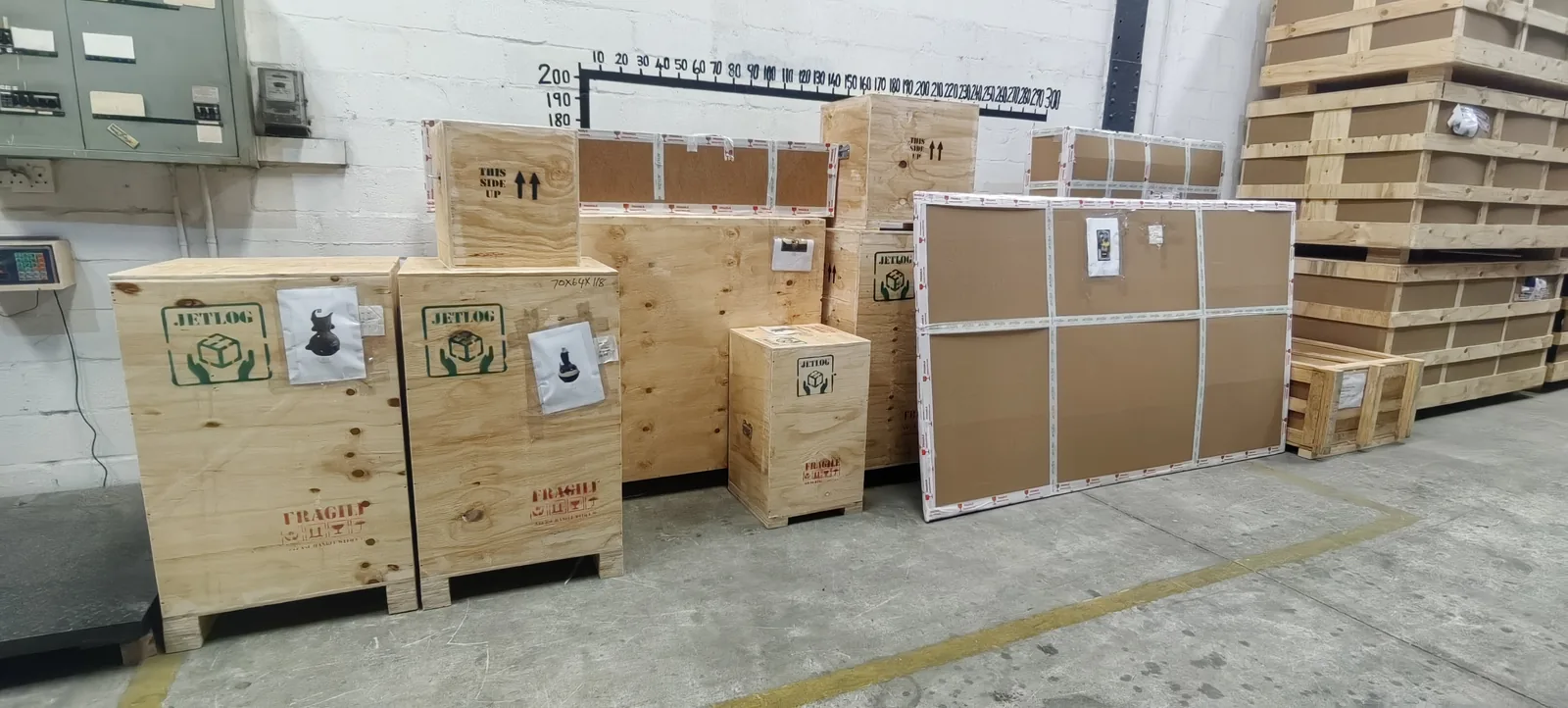
Designer furniture is unforgiving to ship — a single un-braced joint or a missing ISPM 15 stamp can hold an entire consignment at the border. JLog crates each piece individually, not to a standard box size, and handles customs clearance on every consignment.
The Essential Facts: Exporting Designer Furniture from South Africa
Exporting handcrafted or designer furniture from Cape Town requires three critical elements: ISPM 15–compliant crating (all solid wood must be heat-treated and stamped for international shipping), correct HS code classification (9403 for furniture; 940350 for wooden bedroom furniture; 9401 for seating), and VAT zero-rating under SARS section 11(1)(a) — meaning your export VAT rate is 0%. JLog manages all three. We build custom timber crates padded and braced to your furniture’s dimensions, prepare complete customs documentation (commercial invoice, packing list, bill of lading, certificate of origin), and co-ordinate with FedEx and DHL for pickup. Whether you’re shipping a Designer furniture chair to London, a Designer furniture dining table to New York, or a gallery consignment to Sydney, we handle the logistics so you focus on design. Export times: air freight 3–7 days international; sea freight (LCL) 4–8 weeks. Cost: air freight typically R8,000–R15,000 per cubic metre; sea freight R2,000–R4,000 per cubic metre. No hidden fees. Transparent pricing. Direct FedEx and DHL accounts.
Why Designer Furniture Export Is a Specialist Logistics Discipline
Designer furniture is not commodity freight. Each piece is often one-of-a-kind, hand-finished, sometimes fragile, and always valuable. International buyers in the EU, USA, Australia, and Asia expect their purchase to arrive pristine—scratch-free, finish-perfect, and on time. A damaged chair or table is a reputational disaster for the maker and a costly loss for the buyer. For higher-value pieces we also coordinate white-glove delivery at origin and destination so the work reaches the buyer in showroom condition.
Furniture export also carries regulatory complexity. All solid wood packaging used in international shipments must meet ISPM 15 (International Standard for Phytosanitary Measures No. 15) — a United Nations standard designed to prevent the spread of tree pests and diseases. The EU, United States, Australia, and most other major markets enforce ISPM 15 strictly. Non-compliant shipments are seized, fumigated at the importer’s cost, or rejected at port. JLog builds every furniture crate to ISPM 15 standard and stamps each one with the official phytosanitary mark.
Furniture also presents weight and dimension challenges. A large dining table or sectional sofa occupies significant volume but may weigh only 50–80 kilograms. International freight is charged by dimensional weight (DIM weight), calculated as length × width × height ÷ 5,000 (for air) or ÷ 1,000 (for sea). A table measuring 1.8m × 1m × 0.8m has a DIM weight of 288kg for air freight—far higher than its actual weight. Understanding DIM weight is essential to avoid surprises on the invoice.
Finally, furniture requires customs classification. Most furniture falls under HS code 9403 (other furniture), with subdivisions for wooden bedroom furniture (9403.50) and seating (9401). The correct HS code determines your VAT treatment, any export permits, and the buyer’s import duty. JLog’s customs team classifies every shipment correctly the first time.
The Designer Furniture Market in Cape Town and South Africa
Cape Town’s furniture scene is world-class. Leading Cape Town designers work with sustainable solid timber, innovative joinery, and sculptural forms that command premium prices in international markets. Leading studios produce contemporary pieces with meticulous craftsmanship. Smaller independent makers—upholsterers, woodworkers, and artisans—produce bespoke commissions for galleries and private clients globally. Italian buyers in Milan — Europe’s design capital — source bespoke African pieces; JLog runs regular furniture shipments from Cape Town to Milan alongside our EU, UK and US lanes, with a dedicated Cape Town to Milan furniture export service for Salone del Mobile and Lombardy designers.
But the market opportunity is often held back by logistics friction. Many South African furniture makers lack direct access to reliable export partners. International buyers hesitate if they sense uncertainty about arrival condition, timing, or documentation. JLog removes that friction. We’ve worked with leading Cape Town galleries and designer furniture makers to ship hundreds of pieces across the world without damage or customs delay.
ISPM 15: What It Is and Why It Matters
ISPM 15 is the International Standard for Phytosanitary Measures No. 15, adopted by the United Nations Food and Agriculture Organization (FAO) in 2002 to regulate timber and timber packaging in international trade. The standard aims to prevent the unintentional transport of harmful pests and diseases across borders. (Source: IPPC, FAO ISPM 15, 2018 revision.)
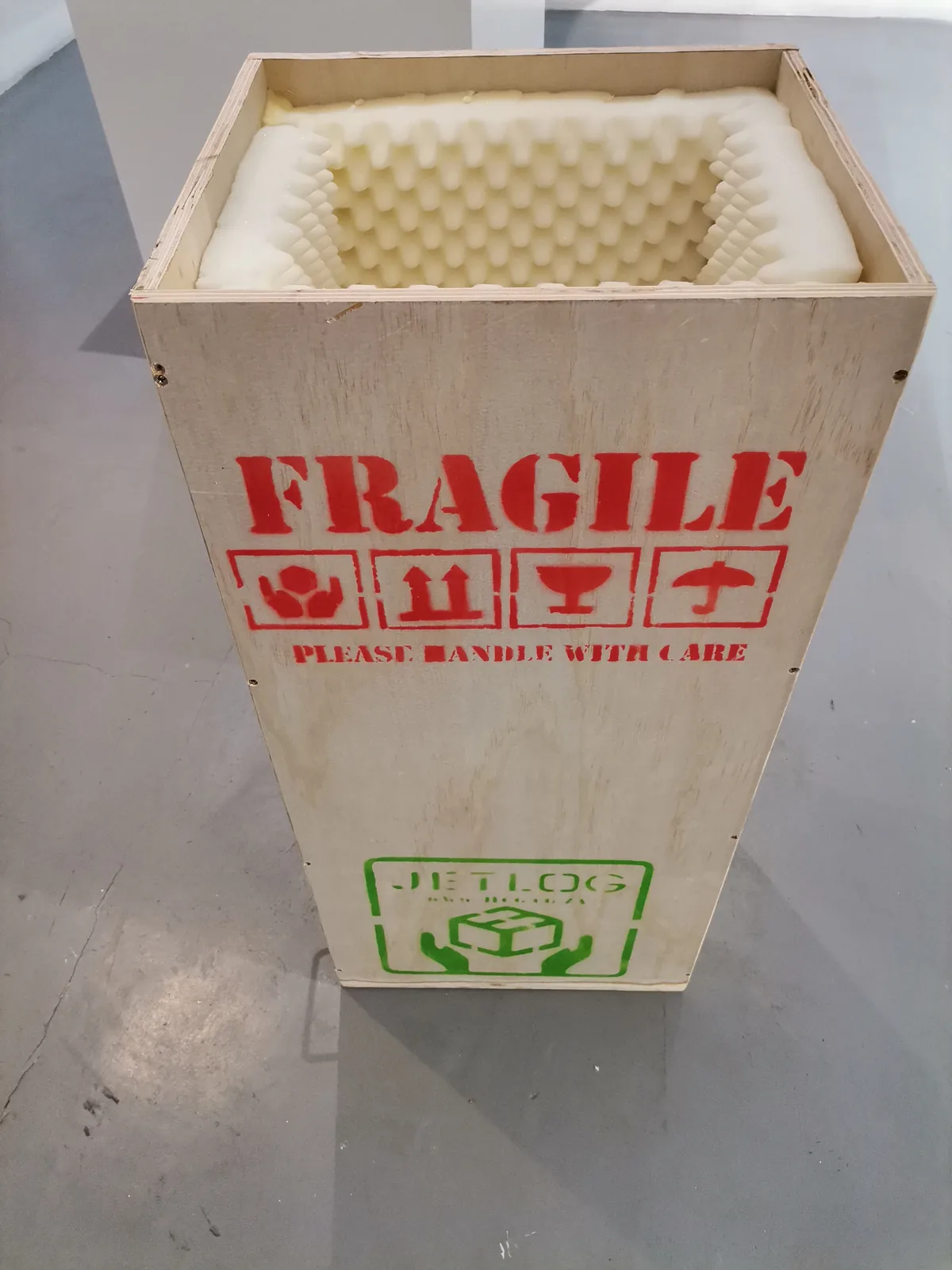
What triggers ISPM 15? Any shipment of solid wood (hardwood or softwood) or wood-based packaging crossing an international border. This includes:
- Wooden furniture (chairs, tables, cabinets, beds)
- Wooden crates, pallets, and packaging materials
- Wooden picture frames, doors, and architectural elements
- Plywood and MDF in quantities above minimal levels
The standard does not apply to kiln-dried or laminated products, or to metal/glass/upholstered furniture without solid wood components. (However, if your upholstered chair has a wooden frame, the frame must be ISPM 15 compliant.)
What does ISPM 15 require? All solid wood used in packaging or the product itself must be heat-treated to a core temperature of 56°C for 30 minutes, OR fumigated with methyl bromide. The treated wood is then marked with an official phytosanitary stamp showing the country of origin, facility code, and treatment method.
The stamp. Every ISPM 15–compliant crate or package must display the official mark: a square 10cm × 10cm stamp showing “ZA” (South Africa), the facility code (JLog’s is assigned by the South African Department of Forestry, Fisheries and the Environment), and a two-letter code indicating the treatment method. Stamps are printed directly on the wood or applied as tamper-proof labels.
JLog’s crating workshop is ISPM 15 registered and approved. We hold the facility code and heat-treat and stamp all furniture crates in-house. No third-party delays. Every crate is ready for immediate international shipment.
The Designer Furniture Export Process: 8 Steps

- Quote Request & Shipment Details. You provide furniture dimensions, weight, materials (solid wood types, upholstery, hardware), finish details, and destination country. We assess dimensional weight, ISPM 15 requirements, and route options.
- Crating Design & Cost Estimate. We design a custom timber crate with internal padding (foam, blankets) and cross-bracing to protect your furniture during transit. We quote crating labour, timber cost, and ISPM 15 treatment. Typical crating cost: on request depending on piece complexity.
- Pickup & Crating. You arrange for the furniture to be delivered to our Woodstock warehouse, or we arrange pickup from your studio (Cape Town area). Our team builds and ISPM 15 heat-treats the crate on-site.
- Documentation Preparation. We prepare a commercial invoice (showing description, HS code, value), packing list (dimensions, weight, contents), and certificate of origin. For some destinations, we arrange EUR1 movement certificates to qualify for preferential tariffs.
- Freight Booking. We select the best freight option — air (FedEx/DHL, 3–7 days) or sea (LCL, 4–8 weeks) — based on your budget and timeline. We manage carrier communication and insurance.
- Customs Clearance & Export Permit. We file the customs export declaration with SARS. Furniture exports are VAT zero-rated, so you recover all input VAT on labour, timber, and freight. We manage any required permits (few apply to furniture, but we check).
- Shipment Tracking. We provide tracking numbers and status updates. For high-value shipments, we monitor port clearance and alert you to any issues.
- Final Delivery & Documentation Handover. The buyer receives their furniture. We send you a complete documentation package (bill of lading, customs clearance proof, carrier receipts) for your records.
Sea Freight vs Air Freight for Furniture: A Comparison
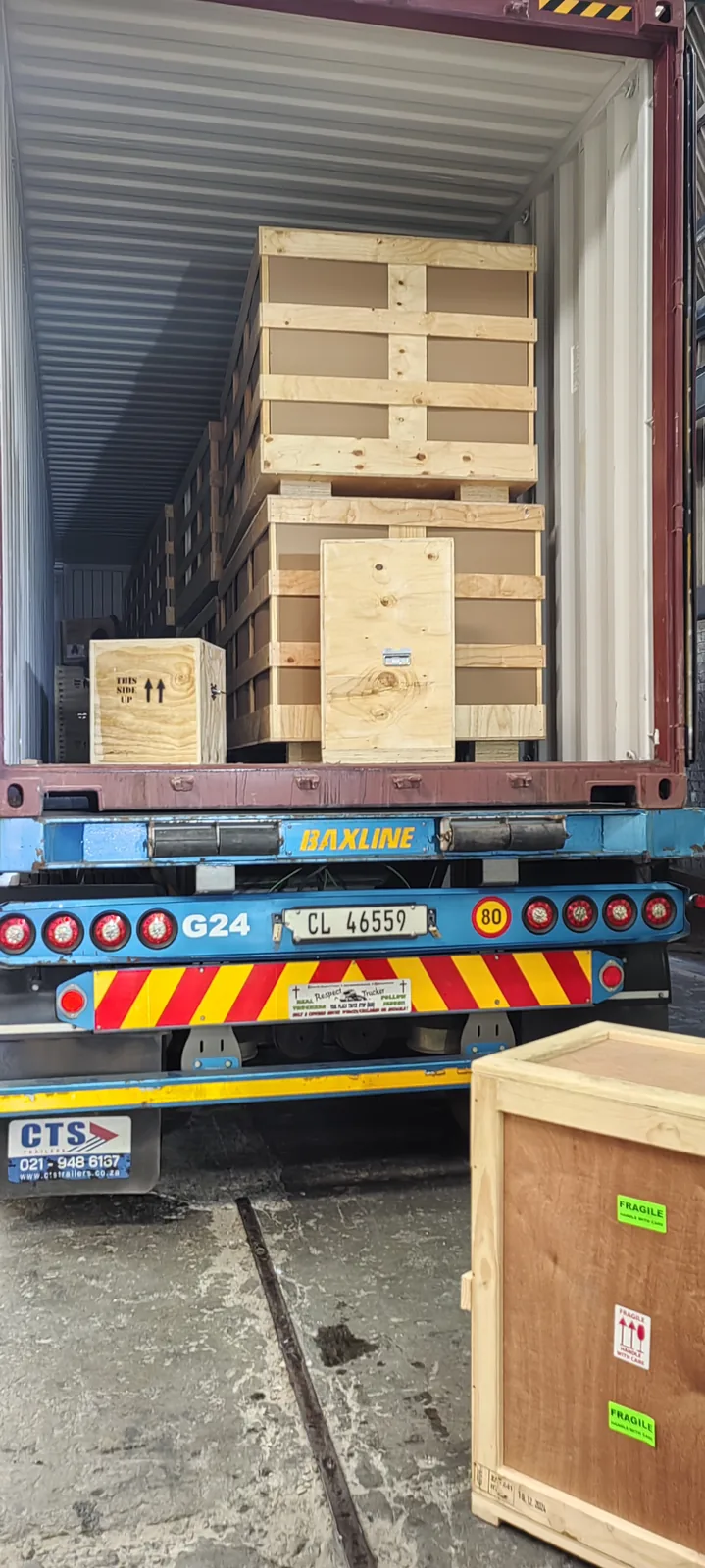
| Factor | Air Freight (international airlines; FedEx/DHL for parcels) | Sea Freight (LCL) |
|---|---|---|
| Transit Time | 3–7 days (Cape Town to major cities) | 4–8 weeks depending on port pair |
| Cost per m³ | On request | On request |
| Minimum Shipment | No minimum; ideal for single pieces | Typically 2–5 m³ (cost-effective above 3 m³) |
| Suitability | Urgent orders; high-value single pieces; customer orders with delivery deadlines | Regular production runs; bulk exports; cost-sensitive buyers |
| Risk / Damage | Lower risk; faster handling reduces exposure to humidity and rough handling | Moderate risk; longer voyage = longer humidity exposure; sea containers better protected than airport handling |
| Documentation | Simpler; courier (FedEx/DHL) handles most customs; we prepare invoice and packing list | More complex; bill of lading, full customs clearance, import/export declarations; we manage end-to-end |
| Example: 1.8m × 1m × 0.8m Table | DIM 288kg; FedEx Cost ~R12,500–R18,000; Arrival 5–7 days | 1.5 m³; Sea cost ~R3,000–R4,500; Arrival 6–8 weeks |
| Best For | Premium positioning; time-critical deliveries; single-piece sales to discerning clients | Volume exports; galleries with consistent shipments; price-sensitive wholesale buyers |
Our Recommendation: Use air freight for individual bespoke commissions and time-sensitive orders. It preserves the premium nature of your work and justifies price points in target markets (EU, USA, AU). Use sea freight for gallery consignments, wholesale bulk orders, and cost-conscious customers. JLog will advise on the best option based on your shipment profile.
HS Codes and VAT: The Financial & Customs Framework
Every furniture shipment is classified under the Harmonised System (HS) tariff code — an 8-digit number that determines the item’s customs treatment, import duty rate in the destination country, and VAT recovery in South Africa. (Source: SARS Tariff Book, Schedule 1 Part 1; WCO Harmonised System Nomenclature, 2022 edition.)
Furniture HS codes:
- 9401: Seats and seating furniture (chairs, sofas, benches). Includes upholstered and wooden chairs.
- 9403: Other furniture and parts (tables, cabinets, shelving, beds, miscellaneous items).
- 9403.50: Wooden bedroom furniture (bed frames, wardrobes, dressers).
- 9403.60: Other wooden furniture.
Export VAT Zero-Rating. The most significant tax benefit for furniture exporters: furniture exported from South Africa is zero-rated for VAT under SARS section 11(1)(a). This means you do not charge VAT on the export sale, and you can claim back all input VAT paid on materials, labour, and freight.
For example: If you manufacture a dining table with R40,000 in costs (timber, labour, finishing, packaging) and sell it for R70,000 to an international buyer, you charge zero VAT. You claim back the R6,000 VAT paid on inputs (at 15% of R40,000). Your net benefit is R6,000. This makes exports more profitable and more competitive internationally.
How JLog assists: We ensure your invoice clearly states “Export sale — zero VAT under SARS section 11(1)(a)” so your VAT accountant can process the claim. We also prepare the bill of lading and customs export proof required by SARS to support the VAT claim.
Fumigation: When Additional Treatment Is Required
Beyond ISPM 15 heat-treating, some destinations require additional fumigation. Australia, New Zealand, and certain US states demand methyl bromide or phosphine fumigation on top of ISPM 15 to address specific pest risks.
JLog can arrange fumigation in Cape Town (turnaround 2–3 days) at a cost of R800–R1,500 per shipment, depending on volume. We coordinate this before air freight departure or sea freight consolidation.
JLog’s Furniture Export Credentials
JLog is not a generic freight forwarder. We specialise in high-value, fragile goods — and we have proven credentials in designer furniture.

Designer furniture: We have shipped multiple bespoke designer furniture commissions to international galleries and private collectors in London, New York, and Paris. Cronje’s work demands flawless presentation; we deliver precisely that.
Contemporary furniture: Contemporary production pieces have moved through our crating workshop destined for showrooms and corporate clients across Europe and the USA. We understand the cost and timing pressures of a production manufacturer.
Art Fair & Gallery Expertise: As the official logistics carrier for the Investec Cape Town Art Fair, JLog manages complex, multi-piece shipments with competing timelines and exacting quality standards. We apply the same discipline to furniture as we do to fine art.
Direct Carrier Relationships: JLog has direct FedEx and DHL accounts with negotiated rates. We do not mark up courier charges; we pass through carrier rates and add a transparent service fee for crating, documentation, and co-ordination.
ISPM 15 Registered & Approved: Our crating facility is formally registered and approved by the South African Department of Forestry, Fisheries and the Environment. Every crate we build is stamped and ready for international shipment without further treatment or delays.
Frequently Asked Questions — Designer Furniture Export
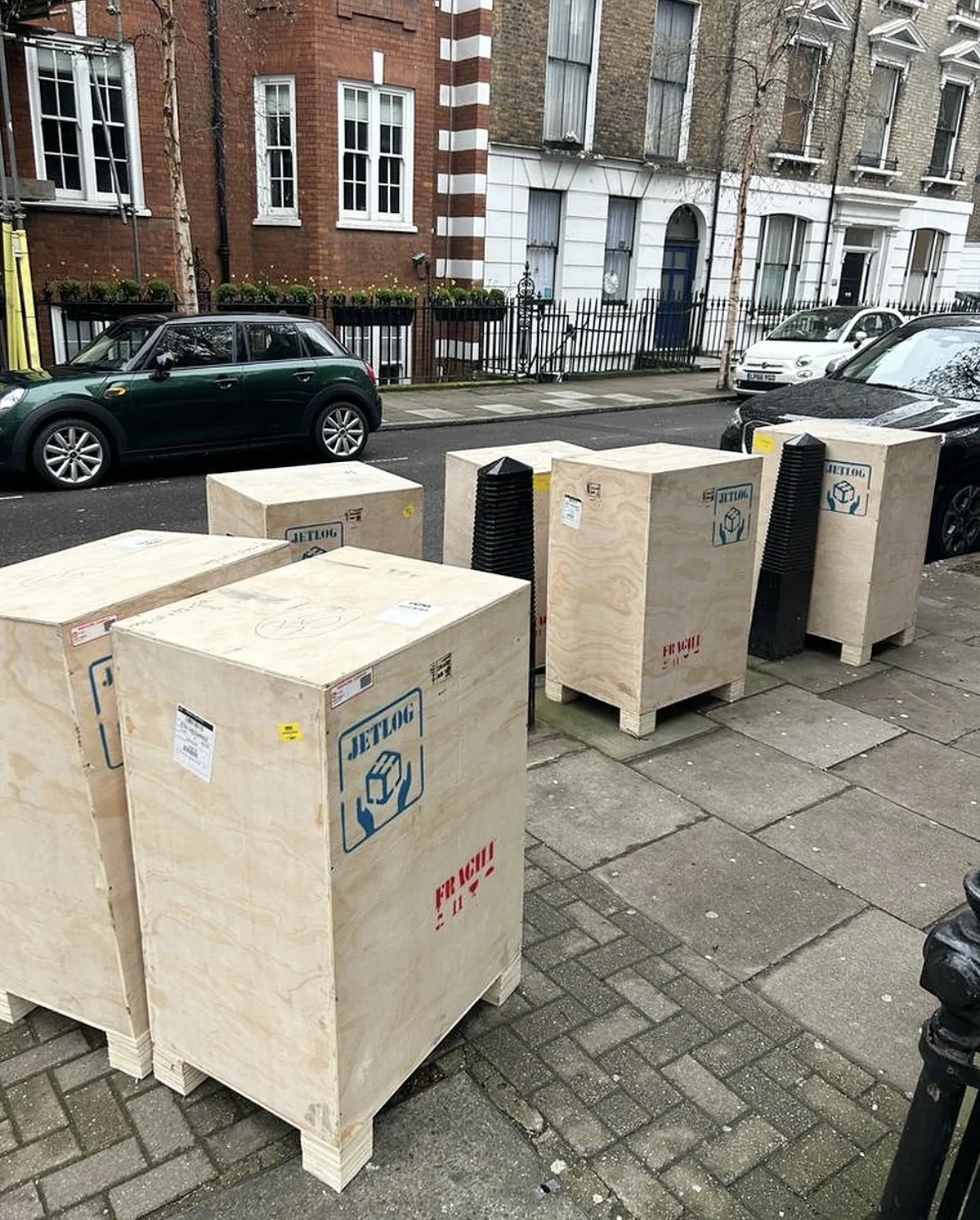
Ready to Export Your Furniture?
Tell us about your furniture, your destination, and your timeline. We will come back to you with a crating quote, freight options, and a clear export plan.
Call: 021 300 6099
Email: [email protected]
Address: Unit 12C, Nearby Industrial Park, 10 Railway Street, Woodstock, Cape Town, 7925
Opening Hours: Monday–Friday, 08:00–17:00 (SAST)
We respond to all enquiries within 2 business hours.